 An official website of the United States government


NIH Unified Funding Strategy Webinar Recording and Related Resources
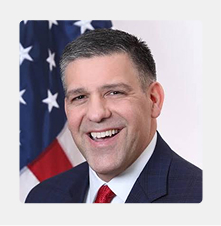
“What incentives are needed to drive discovery and produce this strong research ecosystem? We believe the Unified Funding Strategy is key. It is a multifaceted, harmonized approach to funding that incentivizes a strong research ecosystem. Peer review and scientific review remain at the center, while funding decisions also take into account mission alignment, geographic balance, Institute and Center priorities, investigators' career stages, and good stewardship of American taxpayer dollars.”
- Matthew Memoli, M.D., NIH Principal Deputy director
NIH recently brought together members of the extramural research community to learn more about the NIH Unified Funding Strategy (see the NIH Director statement and this NIH Extramural Nexus article). Panelists from across NIH Institutes, Centers, and Offices (ICOs) addressed questions submitted in advance about how the strategy will inform funding decisions and support a strong, balanced, and sustainable biomedical research enterprise.
The conversation provided an opportunity to learn more about the strategy, including NIH’s approach to funding decisions and its commitment to supporting a broad portfolio of meritorious research. Overall themes heard from the research community helped guide the conversation.
What We Heard: Key Themes from the Research Community
Funding decisions. The Unified Funding Strategy helps shape NIH’s funding decisions, which still involves long-standing considerations of scientific merit (as assessed through independent peer review), scientific opportunity, public health needs, ICO priorities, and portfolio balance. See also this NIH Extramural nexus article.
“Overall, rather than diminishing peer review, this approach increases its importance and the value of the input it provides for funding decisions.”
- Jon Lorsch, Ph.D., NIH Deputy Director for Extramural Research

Peer review, scores, and paylines. Questions focused on how applicants should interpret review outcomes as IC-specific paylines are no longer used. The strategy continues to center peer review and places greater emphasis on the full range of reviewer discussion and assessment.
“Although this may seem like a significant change in how NIH operates, we do not expect changes to the peer review process itself. We will continue to rely on volunteer reviewers, who have historically provided the input NIH needs to fund the best science for the United States. We will continue to recruit reviewers and issue summary statements that colleagues across NIH and the funding Institutes rely on when making funding decisions.”
- Ray Jacobson, Ph.D., Director, Center for Scientific Review

Maintaining Transparency and consistency across NIH. Using this common NIH-wide framework will help guide funding decisions across ICOs, while preserving appropriate ICO flexibility and established safeguards for scientific independence.
“We frequently communicate priorities, but the communication is two-way. We need to listen, and we are listening to and working with our community to establish priority topics. Those topics are constantly evolving…Each Institute has a general domain; for NIBIB, it is technology development. But the science is dynamic and continuously changing, so it is important to maintain this two-way dialogue.”
- Bruce Tromberg, Ph.D., Director, National Institute of Biomedical Imaging and Bioengineering

Supporting a strong research enterprise. Questions also addressed early-stage investigators, existing NIH support, and geographic representation. Scientific merit remains the primary driver, with these factors continuing to inform broader portfolio considerations in support of a strong and sustainable research enterprise.
“The Unified Funding Strategy will make it easier to ensure that the next generation of scientists is given a chance. In the process, we open the door to greater innovation. In my view, it is a win-win.”
- Nora Volkow, M.D., Director, National Institute on Drug Abuse

Programmatic fit. Applicants and researchers asked how to understand priorities and assess programmatic fit. The guidance remains to focus on rigorous, important, and innovative science, and to engage program staff for input on IC priorities, scientific fit, and portfolio context.
“We are no longer focusing on a single score. We are considering the breadth of information from the initial peer review process along with the other factors in the strategy…Institute and Center directors retain their long-standing delegated authority to make funding decisions. Those decisions are informed by peer review, programmatic expertise, public health needs, and Institute priorities.”
- Karl Malik, Ph.D., Director, Division of Extramural Activities, National Institute of Diabetes and Digestive and Kidney Diseases

Available Resources Related to the Event
- Webinar Recording and Transcript
- Presentation Slides (PPTX, 3.2 MB)
- Social Media Highlights
- NIH Grants and Funding Website: Funding Decisions