 An official website of the United States government


Inside Extramural at the National Institute on Deafness and Other Communication Disorders (NIDCD)
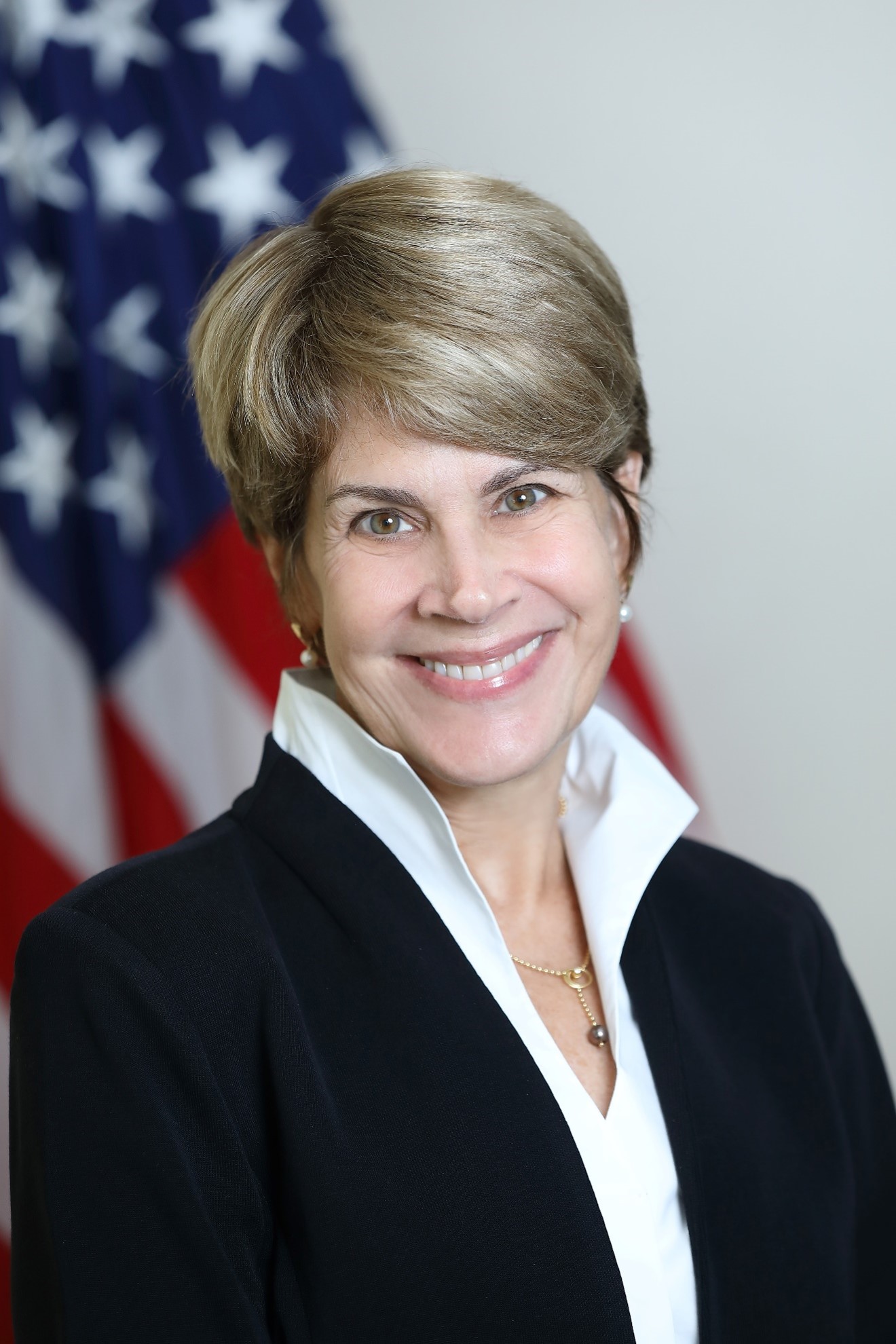
Debara L. Tucci, M.D., M.S., M.B.A., Director of the National Institute on Deafness and Other Communication Disorders (NIDCD)
Message from the Director, Debara L. Tucci, M.D., M.S., M.B.A.
Every day, tens of millions of Americans navigate the world with a communication disorder—such as an isolating hearing loss, a faltering voice, a fading sense of taste or smell. Our mission at NIDCD is to change that reality through partnerships with the research community.
We are doing so in part through implementing our 2023–2027 NIDCD Strategic Plan: Advancing the Science of Communication to Improve Lives. This plan was built in close collaboration with our scientific community, professional and advocacy organizations, and the public. We strive to carry that same collaborative spirit when working with the extramural research community to turn the plan's priorities into funded science.
Moreover, we anticipate some of the most important advances may come from investigators in fields that complement or fall outside our traditional mission areas studying hearing, balance, taste, smell, voice, speech and language. This means neuroscientists, data scientists, bioengineers, immunologists, and other experts can bring tools and perspectives that advance our understanding of these critical areas. To this end, one of my priorities is to lower the barriers for extramural investigators to bring their relevant expertise to communication research.
Our advisory council has been tracking progress against the strategic plan's themes, where we have momentum, where the gaps are, and where your ideas can make the difference. I share updates on this progress in my Messages from the Director.
As we approach NIDCD's 40th anniversary in 2028, I am struck by how far the science has come and by how much opportunity remains. If your work touches our mission, reach out to our program staff —whether you have a question about your application, want to understand our priorities, or want to know whether NIDCD is a fit for your research.
Featured Opportunities and Research Priorities
Funding opportunities aligned with the strategic plan. The most direct way to respond to the plan is through submitting investigator-initiated applications to parent opportunities or other broad announcements within the plan’s themes. Explore NIDCD notices of funding opportunity (NOFOs) and our separate Highlighted Topics to learn more about areas we are interested in supporting. Also consider NIH-wide opportunities, which are co-sponsored by multiple NIH Institutes and Centers around a shared scientific theme and can be a good fit for research that spans more than one institute's mission. When preparing an application, reach out to the listed scientific contacts to confirm your idea fits the opportunity and the institute's priorities. Please also visit NIDCD's profile page on the NIH Grants and Funding site to see the full picture in one place.
Investigators from outside our usual mission areas. If you work in an adjacent field and see a connection to communication science, the plan's crosscutting priorities—innovation through partnerships, advanced technology, and data science—are natural entry points. Our NIDCD Director's Seminar Series illustrates how investigators outside our traditional mission areas contribute to advancing communication science and share how their work connects to the strategic plan. A conversation with a program officer can then help you refine your idea and understand how it aligns with NIDCD’s mission, research priorities, and funding opportunities (see this Nexus article for advice and reminders).
- Dissemination and implementation (D&I) science. Discoveries only improve lives when they reach clinical care. NIDCD encourages D&I research that closes the gap between what we know and what we do across our mission areas. Read more about NIDCD's recent activities and funding opportunities in D&I science.
- Human temporal bone resources. Human temporal bone research is essential because laboratory animal models do not exist for most otologic disorders. Analysis of human temporal bone tissue paired with matched medical records offers the only opportunity to understand many otologic diseases and disorders. NIDCD supports a national otopathology research infrastructure open to the entire research community:
- The Registry — the National Hearing and Balance Organ Donor Program coordinates nationwide collection, donor recruitment, and specimen information.
- The Network — the NIDCD National Human Ear Resource Network improves the quantity, quality, and availability of human inner and middle ear specimens and shares methods across laboratories.
- The Repository — Earbase provides digitized temporal bone images and associated data through a widely accessible database.
What We're Hearing from Our Community
Will NIDCD cap awards?
This is the question we hear most, and we want to be clear and direct.
- The $2 million Special Council Review threshold. NIDCD follows the NIH-wide Special Council Review policy that directs Institute Advisory Councils to provide additional review of applications from program directors/principal investigators who receive $2 million in total costs per year to determine if additional funds should be provided to already well-supported investigators. NIDCD uses this as a factor when making funding decisions (see this related Nexus article for more). Relatedly, please also be aware that NIH is considering options for capping the number of simultaneous research project grants (RPGs) a researcher may have, with additional information forthcoming (see this Nexus article).
- Large-budget applications. Consistent with the NIDCD's Funding Policies and Considerations, applications over $500,000 direct costs per year may be deprioritized and, if chosen for funding, may be subject to a budget reduction. Except in rare circumstances, these statements apply. If you have questions regarding your grant application, please reach out to your program officer.
- Check current fiscal year guidelines before you apply. Each year NIDCD publishes Funding Guidelines that specify how competing awards will be funded, including award levels by budget type and, during a continuing resolution, limits on the number of new applications awarded. Because these guidelines are updated each fiscal year, confirm the current terms on our Funding Policies and Considerations page.
Keeping our Commitments
As the funding landscape evolves, several NIDCD priorities have not changed.
- Early Stage Investigators (ESIs). Supporting early career researchers is a priority in the NIH Unified Funding Strategy. We remain committed to funding ESIs, including special consideration for meritorious ESI R01 applications. When the science and eligibility support it, we encourage early career researchers to pursue R01-equivalent awards rather than smaller grant types (see this NIH Extramural Nexus article for funding rates by career stage).
- International research. NIDCD remains committed to supporting international research collaborations that advance our mission and global communication health. Reinforcing the NIH Director’s 2025 statement, NIH-supported international research should have a clear scientific rationale to be conducted abroad rather than in the U.S. and have direct potential to generate knowledge to improve or protect the health of Americans.
- Health disparities. NIDCD is advancing research to reduce measurable disparities in our mission areas including developing, testing, and scaling evidence-based clinical and community-based interventions for populations experiencing greater health burdens. Consistent with NIH's solutions-oriented approach, the strongest applications lead with a clearly defined health problem and then the population(s), give a clear scientific rationale for the population(s) studied (health disparities science is not limited to race and ethnicity), focus on modifiable factors and rigorous, reproducible outcomes, and offer a plausible path to intervention or implementation.
One step that always helps: reach out to your Program Officer early. They can help you assess scientific fit, navigate current grant policies, and understand application submission deadlines.
Resources for Applicants and Award Recipients
- NIDCD Early Career Research (ECR) Award. For investigators within seven years of a terminal degree, the ECR award provides support to collect preliminary data and establish research independence, with the intent to apply for a successful R01 while the candidate is still an ESI.
- Training across career stages. NIDCD supports research training and career development across the full spectrum of education levels (see these Nexus articles on the new R25 and F99/K00 funding opportunities).
- For extramural training and career development, including predoctoral and postdoctoral fellowships and mentored career development (K) awards, see all NIDCD training and career development programs.
- Our intramural training programs are also open to the broader community. They train future members of the extramural workforce interested in hearing-research education. Examples include the NIH Summer Internship Program and postbaccalaureate opportunities in NIDCD laboratories, which prepare early career trainees who go on to extramural graduate programs and careers, and the free, week-long EARssentials course, which welcomes virtual attendees from institutions worldwide. Recorded intramural lectures—including EARssentials sessions and the NIDCD Beyond the Lab seminar series—are freely available in the NIDCD Lecture Archive.
- How to apply. The NIH Grants Process resource walks you through the full grant lifecycle, from finding an opportunity, applying, peer review, and post-award management.
Ways to Engage with NIDCD
- Share your input. The Request for Information on New and Emerging Areas of Science Relevant to the NIDCD Mission invites the community to help shape an update of the NIDCD Strategic Plan for 2028–2032. Responses are due December 11, 2026, and may be submitted by email to [email protected] or by mail to the National Institute on Deafness and Other Communication Disorders, 31 Center Drive, Suite 3C25, Bethesda, MD 20892.
- Watch open sessions of the National Deafness and Other Communication Disorders Advisory Council for discussions and updates on NIDCD policies, budgets, and program goals.
- Look out for NIDCD 40th anniversary events. As we approach our 40th anniversary in 2028, we will promote anniversary features, milestones, and events.
Questions: [email protected]