 An official website of the United States government


NIH Extramural Loan Repayment Programs: Simplified Structure, Continued Commitment
The NIH Loan Repayment Programs (LRPs) are programs established by Congress and designed to recruit and retain highly qualified health professionals into biomedical or biobehavioral research careers. Applications for FY 2027 Extramural LRP awards will be accepted from September 1 until November 19, 2026.
For the upcoming cycle, Extramural LRP applicants will choose from three subcategories, which is designed to make it easier to identify which pathway fits their research and apply with greater clarity and confidence. Down from six subcategories previously, this change is part of a broader NIH effort to simplify the funding landscape and make programs easier to navigate. NIH’s commitment to supporting early career scientists through loan repayment remains unchanged. Consolidating LRP subcategories is intended to reduce complexity for applicants, not reduce support. All existing LRP benefits and eligibility pathways remain in place.
Following a review of the six subcategories, NIH is consolidating LRP support around three core pathways to strengthen their reach and impact going forward:
- Clinical Research (L30): NOT-OD-26-081
- Pediatric Research (L40): NOT-OD-26-082
- Facilitating Opportunities in Cutting-edge Science (FOCUS, L70): NOT-OD-26-083 (new)
Applicant Pathways Going Forward:
As part of this consolidation, applicants previously eligible under the Clinical Researchers from Disadvantaged Backgrounds (L32), Contraception and Infertility Research (L50), and Health Disparities Research (L60) subcategories should apply under the pathways outlined below.
- L32 applicants are eligible to apply under L30. L30 is the direct successor pathway given the shared research-related requirements.
- L50 applicants can apply under L70. The Eunice Kennedy Shriver National Institute of Child Health and Human Development (NICHD) was the only NIH Institute or Center that previously supported the L50 program. The other subcategories drew support from 24 ICs. L70’s adaptable, IC-driven structure allows NICHD to designate contraception and infertility research among its focus areas.
- L60 applicants may be eligible to apply under L30, L40, or L70. Depending on the nature of their research, applicants should review the eligibility criteria for each
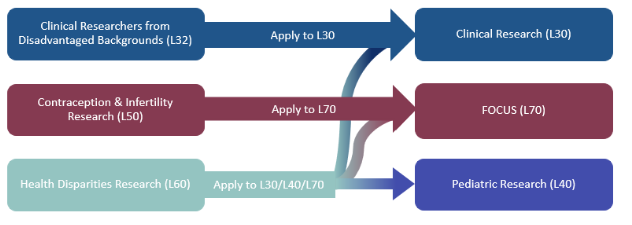
Figure 1: Applicant Pathways to remain in LRP
Rebranding REACH to FOCUS (L70)
Research in Emerging Areas Critical to Human Health (REACH) is being renamed Facilitating Opportunities in Cutting-edge Science (FOCUS). The new name more clearly conveys its purpose: directing attention and resources toward high priority, emerging, and gap areas in biomedical research, as identified by each IC. The subcategory’s function and underlying policies remain unchanged.
FOCUS retains the flexibility that defined REACH, allowing the category to adapt as agency and IC priorities evolve over time. This continuity ensures that the program’s core function carries forward, while the updated name better reflects its scope and aligns more naturally with IC specific strategic priorities.
Aligning with NIH’s Broader Modernization Efforts
Beyond the FOCUS rebrand, streamlining the number of LRP subcategories supports NIH’s commitment to reduce administrative burden and simplify the application and funding process.
This change is designed to:
- Support a simpler, more efficient LRP structure that reduces administrative complexity for applicants
- Center outreach and communications on the overall value of the LRP, rather than distinctions between subcategories
- Minimize unnecessary movement between subcategories among applicants and awardees
- Maintain all existing LRP benefits and eligibility pathways for applicants
- Provide a more straightforward, navigable experience for prospective applicants
Together, these steps are designed to make the LRP more accessible and easier to understand, while maintaining continuity of support for the research communities it has traditionally served.
Questions: [email protected]